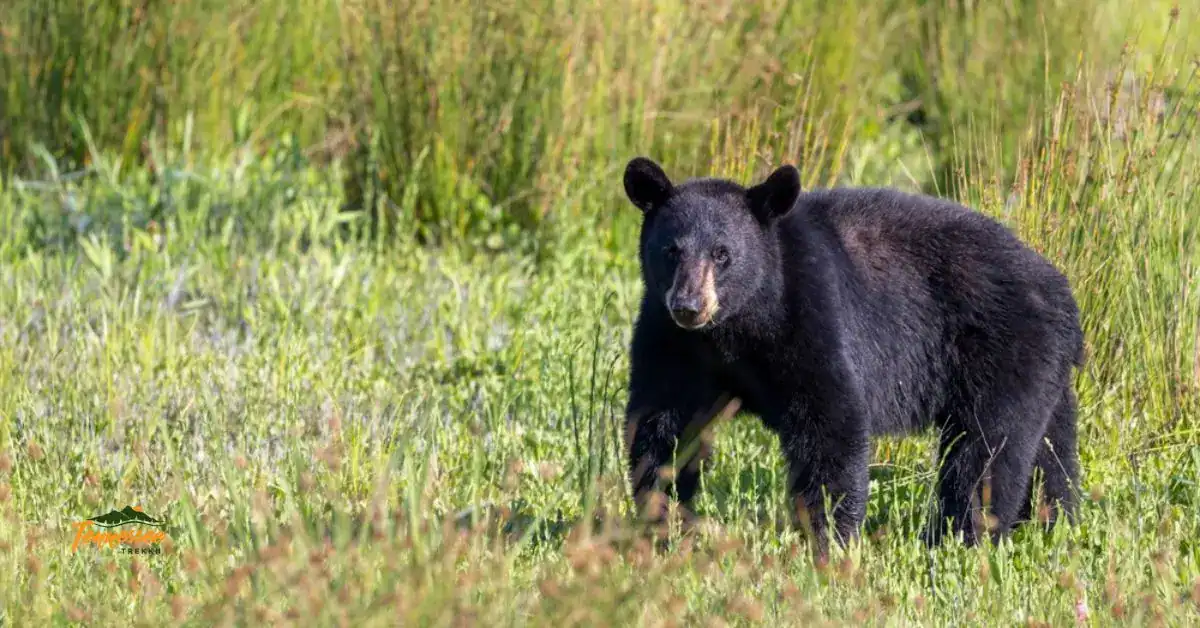
Bears in the Smoky Mountains have a way of turning an ordinary drive into the story you tell for years. You round a bend in Cades Cove, someone gasps, and there it is—a black bear moving through the tall grass as if it has nowhere in particular to be. Nearly everyone wonders the same thing: how many black bears live in the Smoky Mountains, and are they dangerous? The Great Smoky Mountains National Park is home to one of the largest black bear populations in the eastern U.S., so the odds of an encounter are real—and so is our responsibility to keep these animals wild.
Here are the facts about black bears in the Smokies: how many call these mountains home, where and when to spot one, what to do if you see a bear, and how to make the moment count from a respectful distance.
Disclosure: This site contains links from our trusted partners, including Amazon. If you book or purchase through these, I earn a small commission at no extra cost to you. Thanks for supporting Tennessee Trekkn!
How Many Bears Are in the Smoky Mountains?
More than you’d guess. Biologists estimate roughly 1,900 black bears live in Great Smoky Mountains National Park — about two per square mile, one of the densest populations in the country.
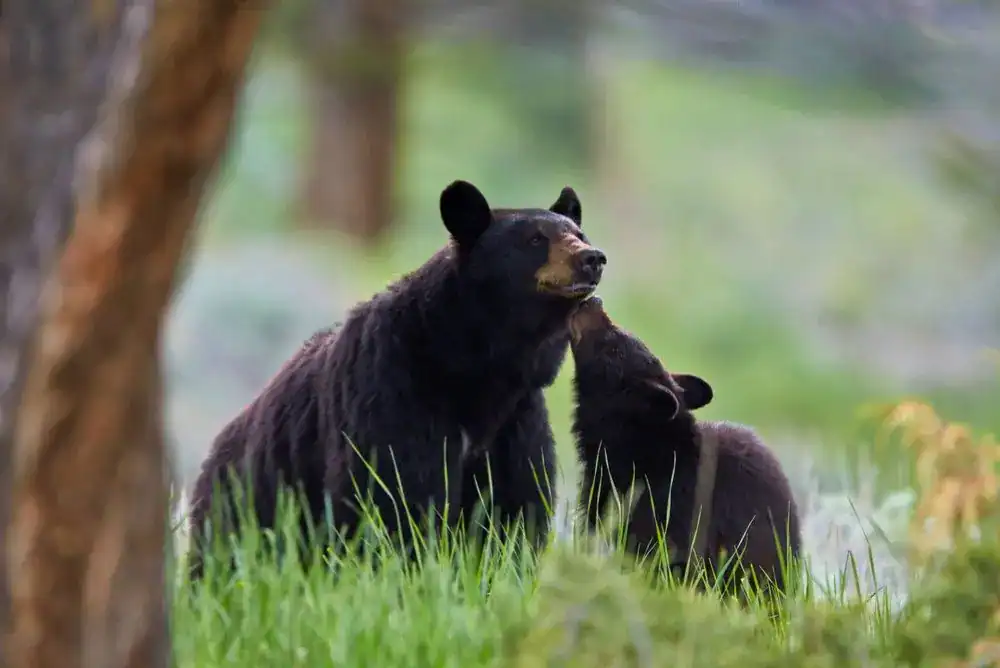
There’s a reason they thrive here. The Great Smoky Mountains National Park is the largest protected black bear habitat in the eastern U.S., and bears use every bit of it, from the valley coves to the highest peaks. Berries, nuts, and acorns everywhere — just about perfect bear country.
One thing worth clearing up: every bear here is an American black bear. No grizzlies, no brown bears. Black bears out west can run cinnamon or brown, but ours are almost always true black.
Meet the Black Bear
They’re bigger than most folks expect. Males run around 250 pounds in summer, females a bit over 100 — but by fall, eating around the clock for winter, many nearly double that.
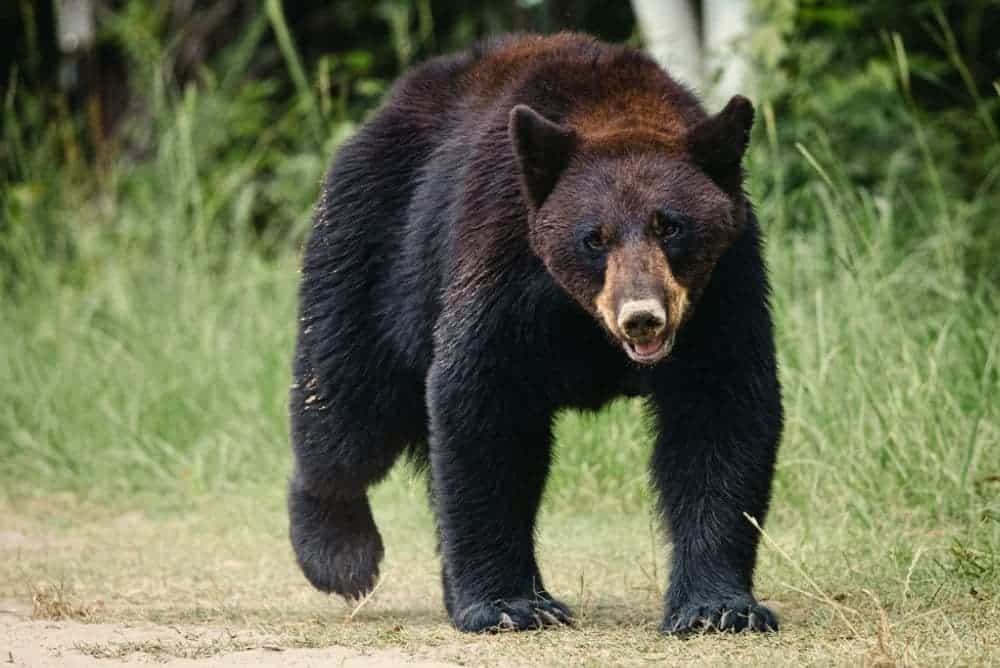
Cubs start at the other end of the scale entirely. They arrive in the quiet of winter, usually late January or early February, weighing just eight ounces — and stay close to mom for about a year and a half while she teaches them how to be a bear.
🌲 Trekkn Trivia:
How many calories can a black bear eat in a single fall day?
Up to 20,000 — about ten times what a person eats. All of it building the fat they’ll live on through winter. 🐻
A Few Fun Smoky Mountain Black Bear Facts
Some of what we know about black bears is exactly what you’d expect. The rest is a little stranger — and a lot more fun.
- They don’t hibernate — they torpor. True hibernators drop into a deep, hard-to-wake sleep. Black bears enter torpor instead: heart rate way down, but they can rouse and wander out on a warm winter day.
- They sleep in trees. Not under them. Bears here often den high inside standing hollow trees — a Smokies specialty you won’t see most places.
- They can smell your sandwich from a mile away. Literally. That nose is the whole reason food storage matters so much.
- They’re better climbers than you. Better swimmers, too. And faster — 30 miles an hour.
🌲 Trekkn Tip:
Scan the roadside berry bushes. About 85% of a black bear’s diet is berries, nuts, and plants, so in late summer those bushes are a bear’s dinner table — and one of the best places to spot one.
Are Black Bears Dangerous?
Honestly? Less than you’d think. Black bears are shy animals that would rather avoid you than meet you, and dangerous encounters are extraordinarily rare. You’re in far more danger driving to the trailhead than you are on it.
But rare isn’t never, and these are wild animals with no interest in being anyone’s photo op. The rules are simple: stay at least 50 yards back — that’s 150 feet, and coming closer is illegal in the park, not just unwise. If a bear notices you, back away slowly and keep it in sight. Never run.
The one that matters most: never feed a bear, and never leave food or trash where one can find it. A black bear that learns to associate people with an easy meal becomes a dangerous food-conditioned bear — and that story rarely ends well for the bear. Keeping them wild is the whole job.
→ WILDLIFE AWARENESS IN THE SMOKIES: STAY SAFE, SPOT MORE
Where to See Bears in the Smokies
Black bears roam every elevation of the Great Smoky Mountains park, but a few spots stack the odds in your favor. → Cades Cove is the classic — the open valley and its loop road give you sightlines you won’t get anywhere else, and the berry bushes and meadows keep bears coming back. Roaring Fork Motor Nature Trail near Gatlinburg is the other reliable bet, where bears often lounge right up in the trees along the road.
The Best Time of Year to See Bears
Spring through fall is your window. Bears are most active once the weather warms — spring brings mamas out with new cubs, summer keeps them foraging wide, and fall may be the best of all, when they eat almost constantly to fatten up for winter.
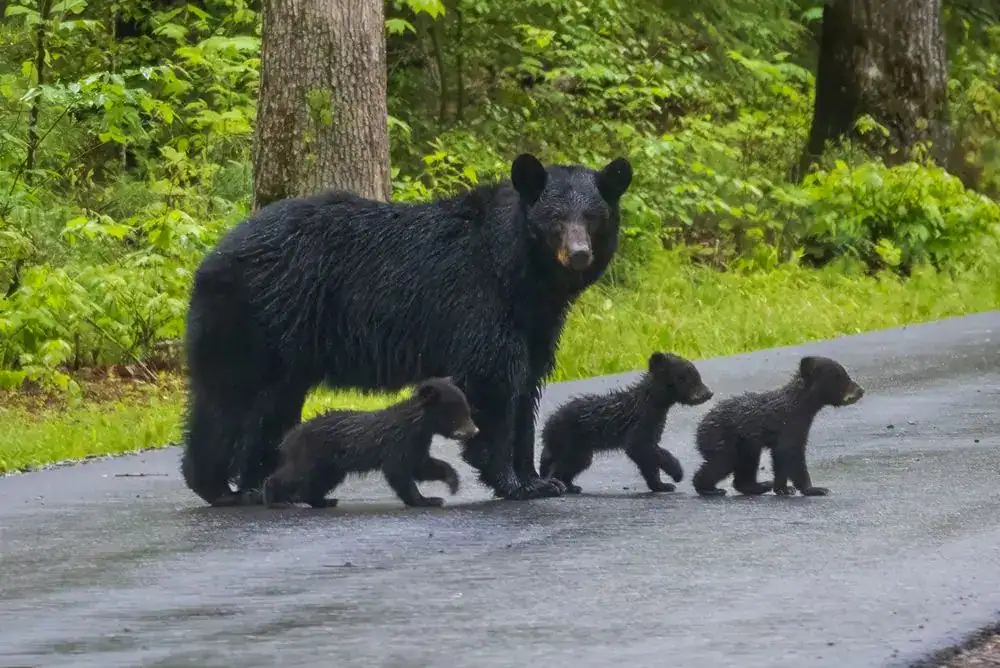
Time of day matters just as much: early morning and late afternoon are the golden hours. Winter is your leanest stretch, though a warm spell can always coax one out of the den.
Plan Your Smoky Mountain Bear Adventure
Know the facts before you go, because however you meet them — from a Cades Cove overlook, a quiet bend in the road, or the safety of your own car — black bears in the Great Smoky Mountains have a way of making a trip unforgettable. Give them their space, keep them wild, and let the sighting be the icing on the cake.
Happy Trekkn’, Friends! 💛
KEEP EXPLORING THE SMOKIES
Bears are just the beginning. Whether you’re planning the trip, picking a place to stay, or looking for your next adventure in the park — here’s where to head next.
→ LEAVE NO TRACE IN THE SMOKIES
→ CADES COVE VEHICLE-FREE DAYS
→SMOKY MOUNTAIN PARKING PASS INFO
→ PLACES TO STAY IN THE SMOKIES
🌲 Trekkn Tip:
Before you head into Great Smoky Mountains National Park — whether you’re driving the loop or hitting the trails — always check the → NPS road and trail closures page. Weather, construction, and bear activity can shut things down with little notice, and a quick look saves a long detour.
Disclosure: This site contains links from our trusted partners, including Amazon. If you book or purchase through these, I earn a small commission at no extra cost to you. Thanks for supporting Tennessee Trekkn!